
logo
  • Appointment and info:
    +36 30/408-1265
  • Vasas Pasaréti Sportcentrum,
    1026 Budapest, Pasaréti út 11-13.

Outpatient specialties | Orthopaedics

Trigger finger

What is a trigger finger?

The first sign of a trigger finger is that the finger is difficult to bend and may feel stiff. Swelling may appear in the palm. Later, as the symptoms worsen, the finger may “get stuck” in a bent position, and you may only be able to straighten it again with the help of your other hand. You may hear a clicking or snapping sound when moving the finger.
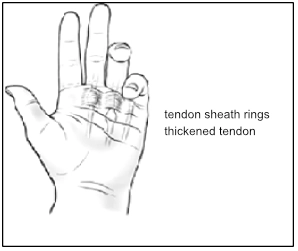
Why does it develop?

The tendon responsible for bending the finger runs through several thickened tendon sheath rings, which resemble a system of tunnels. If the tendon thickens due to inflammation, it cannot pass freely through the tunnel. A knot may form on the tendon, further hindering its smooth glide, which leads to stiffness and pain. This condition is similar to trying to thread a needle with a piece of thread that has a knot in it.

Why does a tendon become inflamed?

There is no clearly identifiable cause of the condition. Heavy use of the fingers can worsen the symptoms of trigger finger, but it has not been proven that the inflammation is related to this. It most commonly occurs in middle-aged women. Diabetes or rheumatoid arthritis may be risk factors.

What treatment options are available?

In very mild cases, resting the fingers may relieve the symptoms. Wearing a resting splint for 7–10 days can reduce the symptoms. If symptoms are more severe and the finger frequently “locks,” anti-inflammatory treatment is recommended. These include topical physical therapy treatments and oral nonsteroidal anti-inflammatory drugs (NSAIDs). When these so-called conservative treatments are ineffective, surgical treatment is recommended.

What does the surgery involve?

During the surgery, we make a small incision in the palm. We incise the tendon sheath ring, thereby allowing the tendon to glide freely. After the surgery, full range of motion in the finger is restored, and you’ll need to exercise the finger several times a day. The wound must not come into contact with water for 10–12 days, until the skin sutures are removed. Full recovery occurs a few weeks after the surgery, and the fingers will be able to bear weight normally.