
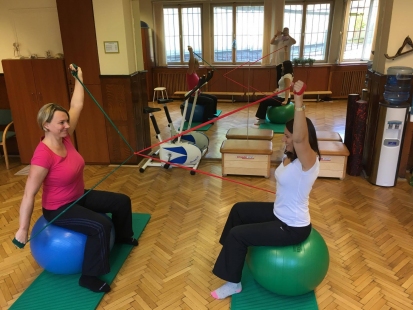
Therapeutic gymnastics is movement used for therapeutic purposes. Also known as physiotherapy, as it means healing with natural energies (not to be confused with electrotherapy, which is the use of physical energies!)
Therapeutic gymnastics is one of the most ancient therapeutic methods, used in prevention, treatment, rehabilitation and, more recently, recreation.
Its history goes back to China, where it was used as Gung-Fu around 2600 BC. In Ancient Greece, Hippocrates helped people to recognise the beneficial effects of movement and massage on the body (breathing exercises, strength training), and in Rome, people also used procedures that were part of natural medicine. Examples include hydrotherapy (the therapeutic use of water), thermotherapy (the use of heat for healing purposes), heliotherapy (the positive effects of natural light) and electrotherapy (using electric rays).
From the Middle Ages on wards, many doctors, educators and experts on the human body have investigated the links between health and exercise.
Swedish fencing teacher Per Henrik Ling was the first to include gymnastic exercises in his system, laying the foundations for what is known as Swedish gymnastics. On this basis, Sweden was the first country to train physiotherapists, who worked with a planned exercise programme tailored to the specific ailments.
In Germany, another distinctive form of gymnastics was created, in which manual methods and individual treatment were emphasized.
By the end of the 19th century, 2 main trends of “medical” gymnastics had become dominant:
- therapeutic gymnastics (physiotherapy),
- preventive gymnastics (hygienic gymnastics)
In Hungary, the training of physiotherapists was started by Alice Madzsar. In 1912, she opened the “Functional Gymnastics Teacher Training Institute”. Later (in 1926), physiotherapy became an independent department at the College of Physical Education.
The basic training is currently 4 years old and is conducted in a college framework. Currently, physiotherapist training is provided in 6 institutions/universities in Hungary.
The field of activity of physiotherapists is expanding every year. The specialisation of graduates is followed by further training courses after the initial training. More and more physiotherapists are working in prevention in addition to the traditional inpatient and hospital areas, and the number of people requiring and using these forms of care is gradually increasing.
It is an integral part of the therapeutic armoury of almost all clinical specialties: intensive care, pulmonology, angiology, cardiology, orthopaedics, traumatology, neurology, surgery, rheumatology, oncology, internal medicine, paediatrics, obstetrics and gynaecology, psychiatry, geriatrics.
In the 21st century, physiotherapy is a complex therapy from prevention to treatment and rehabilitation.